I push a cable through your sewer pipe, and within minutes, I know whether you’re looking at a $3,000 repair or a $15,000 excavation nightmare.
That cable tells me everything.
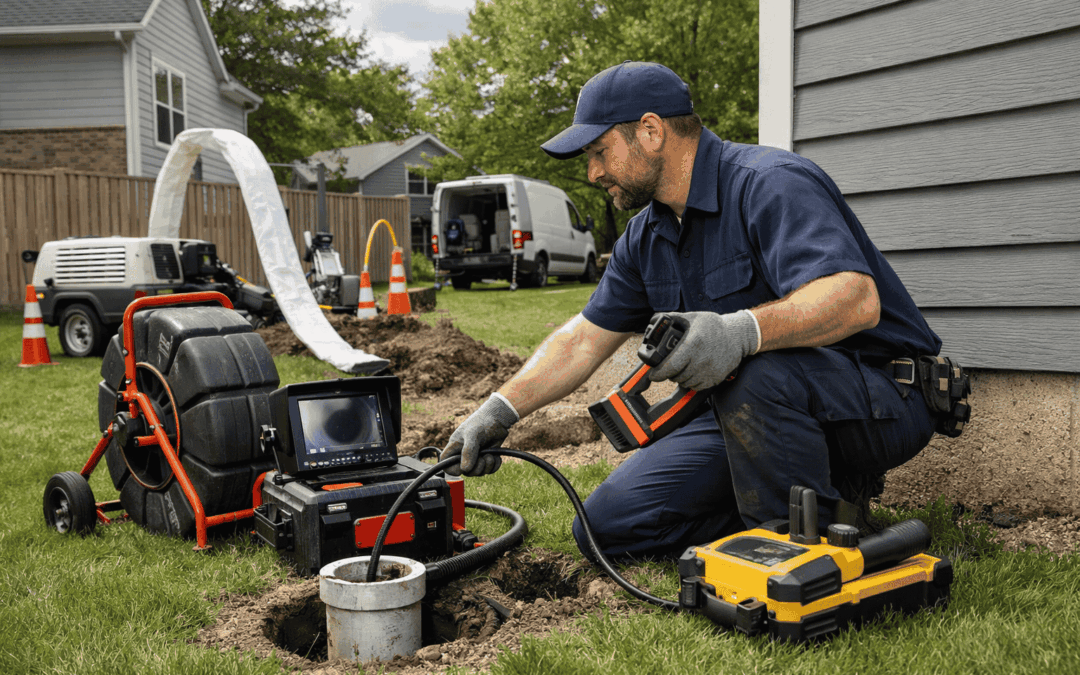
When I arrive at a property in Perham or Alexandria where the homeowner thinks they need their entire yard dug up, I start with this simple test. My service tech has to shove a cable from one end of the pipe to the other. From the house toward the street, or from the street back to the house.
If that cable makes it all the way through, chances are very high we can use trenchless technology and pull a new pipe back through the existing one.
If it gets stuck, we’re looking at some digging.
The Detective Work Behind Every Repair
Most homeowners don’t realize sewer repair starts with detective work. I’m not just fixing pipes. I’m investigating what went wrong and how to fix it with the least disruption possible.
The cable gets stuck when pipes become broken or separated and gravel or dirt plugs the end. When that happens, I can either dig up just that spot to continue pushing the cable through, or fix that section the traditional way.
But here’s where the technology gets interesting.
I use a locator connected to one end of the cable that lets me ping it from above ground. It tells me exactly where that blockage is located and how deep the pipe sits.
No guesswork. No digging up entire yards to find the problem.
Minnesota’s Underground Challenges
Working around Perham and Alexandria, I deal with conditions that make this locating technology both essential and tricky. Different soil conditions affect the accuracy of the locate.
I don’t locate anything below the frost line unless I have equipment to thaw the earth first. That’s just Minnesota reality.
The bigger problem comes from other utility lines buried nearby. Telecom, cable TV, internet lines can give radical or unstable readings that throw off my equipment.
When that happens, I bring in a vac-truck.
Think of it as a giant vacuum that creates small, precise holes instead of large excavations. I can determine what’s underground without the massive disruption of traditional digging.
The vac-truck sucks up all the material and houses it in a hopper. I can either haul it away and bring in different backfill, or recycle and reuse it back into the same hole.
No large excavators driving around your property. No massive piles of dirt sitting on your lawn for days.
The Real Cost Equation
Vac-trucks cost more to rent or subcontract, but they dig much smaller, more precise holes. The tradeoff becomes clear when you look at restoration costs.
At Ellingson, I offer turnkey proposals with multiple options. Option one might include a vac-truck. Option two might use pipe bursting. Option three could be traditional excavating.
But I also include all subcontractors for asphalt, concrete, or landscaping so homeowners see the complete picture.
Here’s what surprises customers: trenchless is commonly the most affordable option when I can access both sides of the pipe and get a cable through.
Repairing a small section of asphalt in the street or a small area of concrete costs far less than replacing driveways, landscaping, sidewalks, and trees that traditional excavation requires.
The numbers support this. Cost savings can reach $10,000 for deeper pipes, with 70% of traditional repair costs coming from excavation and property restoration.
The Timeline Revolution
The time difference transforms how homeowners experience sewer repair.
Traditional repairs mean days of disruption. Torn-up yards. Removed floors. Weeks of restoration work.
Trenchless repair can turn a three-day job into a one-day job in most cases.
For homeowners dealing with sewer backups who can’t use their plumbing during repair, this timeline compression changes everything. They get a fully functioning sanitary sewer by the end of that single day.
There might be concrete patching or excavation backfill to complete, but the sewer works immediately.
Access Requirements and Workarounds
Trenchless pipe replacement requires access to both ends of the pipe. Without that access, the technology won’t work.
But I rarely encounter situations where I can’t find or access both ends.
When infrastructure creates problems, it’s usually permitting issues or road closures needed to access the waste pipe in city streets. Working with different cities and their utilities can create complications.
When that happens, I go back into the yard a little further and make a hole to reconnect the pipe. Homeowners still get the full benefit of trenchless repair. They just don’t get an entirely new pipe from house to city sewer.
I analyze the area around trees, utilities, and solid fixtures to determine the optimal connection spot.
The Minnesota Advantage
Minnesota’s climate creates unique underground challenges that make trenchless technology particularly valuable. Extreme winters and soil shifting lead to pipe fractures, root infiltration, and blockages.
Traditional excavation in frozen ground requires specialized equipment and extended timelines. Trenchless methods avoid most of these complications.
The precision of modern locating technology becomes essential in Minnesota’s complex soil conditions where multiple utility lines create interference patterns.
Contractors with expertise in both the equipment and local conditions can navigate these challenges effectively. The difference between accurate location and guesswork can save thousands in unnecessary excavation.
The Knowledge Gap
After completing trenchless jobs throughout the Perham and Alexandria area, I consistently hear the same thing from homeowners: they wish they had known about this technology earlier.
The technology itself remains vastly unheard of among homeowners who think their only option is digging everything up.
This knowledge gap creates unnecessary stress and expense. Homeowners research traditional excavation costs, prepare for weeks of disruption, and budget for extensive property restoration.
Meanwhile, a simple cable test could reveal that none of that disruption is necessary.
Making the Right Choice
The cable test determines everything, but understanding your options requires working with contractors who offer complete transparency.
When I present repair options, I include all associated costs upfront. Homeowners can compare not just the repair methods, but the total investment including restoration.
The decision becomes clear when you see the complete picture: timeline, disruption, cost, and long-term durability.
Trenchless technology often delivers superior results across all these factors, but only when the initial investigation confirms viability.
That’s why everything starts with the cable.
The technology exists to save Minnesota homeowners thousands of dollars and days of disruption. The challenge is knowing it’s available before you commit to tearing up your property.
When your sewer line needs repair, ask about the cable test first. That simple diagnostic step could change everything about your repair experience.
The revolution is happening beneath your yard. Most homeowners just don’t know it yet.